
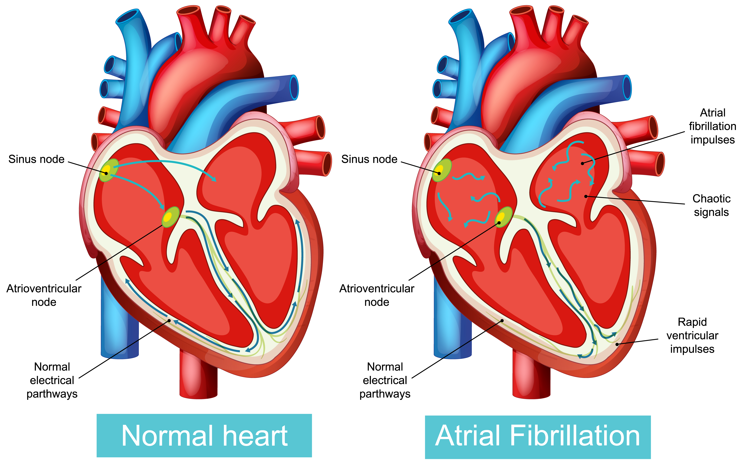
What is Atrial Fibrillation?
Atrial fibrillation, often called AFib, is a common heart rhythm problem. In this condition, the heart beats in an irregular way. Because of this, blood may not flow as well as it should. AFib can happen for short periods or last a long time. In the United States, millions of people live with atrial fibrillation. According to the Centers for Disease Control and Prevention (CDC), AFib increases the risk of stroke and heart failure. Early detection and treatment are important for better health.
Common Symptoms
Many people with atrial fibrillation notice changes in how they feel. However, some may not have any symptoms at all. Still, knowing the signs can help you seek care sooner. For example, you might notice:
Sometimes, symptoms come and go. But if you notice any of these signs, especially chest pain, seek medical help right away.
Causes and Risk Factors
There are many reasons why atrial fibrillation can develop. Often, it is linked to other health problems. For instance, high blood pressure and heart disease are common causes. Other risk factors include:
In some cases, AFib happens without a clear reason. Still, knowing your risks can help you take steps to protect your heart.
Diagnosis Methods
Doctors use several tests to find out if you have atrial fibrillation. First, they will ask about your symptoms and health history. Next, they may use:
With these tests, your doctor can confirm if you have AFib and plan the best treatment.
Treatment Options
Treating atrial fibrillation helps control your heart rate and lower your risk of stroke. There are several AFib treatment options, and your doctor will choose what is best for you. Common treatments include:
Because each person is different, your doctor will explain which options are safest and most effective for you.
Lifestyle Tips for Managing Atrial Fibrillation
Along with medical treatment, healthy habits can make a big difference. For example, you can:
With these steps, you can help manage your AFib and improve your quality of life.
Prevention Strategies
While not all cases of atrial fibrillation can be prevented, you can lower your risk. To do this, try to:
By following these prevention tips, you may reduce your chance of developing AFib.
When to See a Doctor
If you notice signs of atrial fibrillation, do not wait. For example, if you feel a fast or irregular heartbeat, or if you have chest pain, seek help right away. Even if your symptoms are mild, it is important to talk to your doctor. Early care can prevent serious problems like stroke or heart failure.
In summary, atrial fibrillation is a common but serious heart condition. With the right care and healthy habits, you can manage your symptoms and lower your risks. Consult the best cardiologist Dr. Ramakrishunudu for personalized advice on atrial fibrillation.